
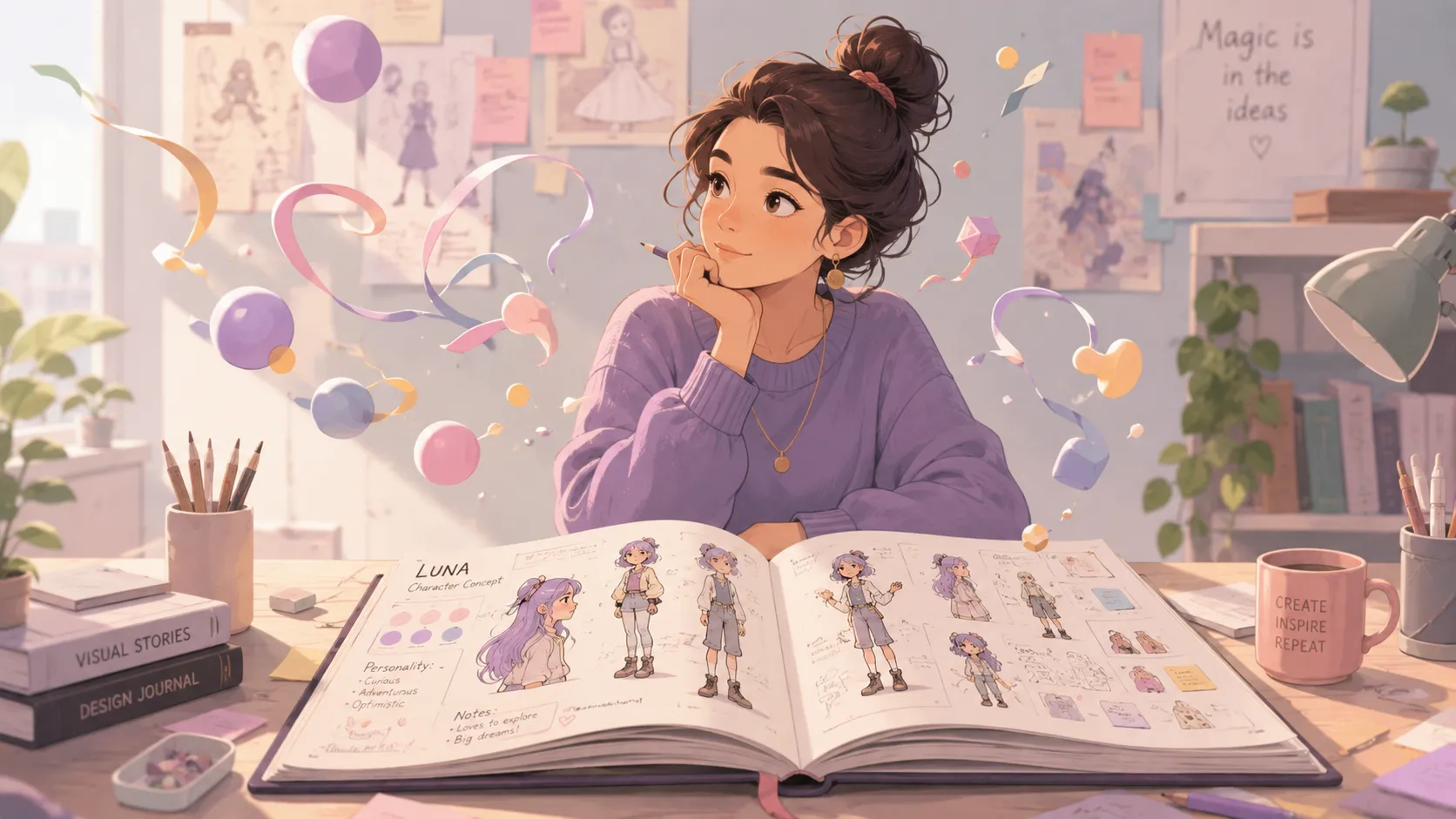
Video game characters are no longer just avatars controlled by players. They are emotional anchors, storytelling tools, marketing icons, and sometimes the entire reason a game succeeds. Think about it for a second. When people mention legendary games, they often remember the character first before the gameplay itself. That emotional connection is powerful. A well-designed character can transform an average game into a memorable experience that players talk about for years.
Modern gaming trends in 2026 show that players are increasingly attracted to characters that feel authentic and emotionally layered. Industry discussions around current design trends highlight a growing preference for textured, imperfect, and more human-looking character styles instead of overly polished designs. Designers are deliberately adding asymmetry, expressive flaws, and unique visual identities to make characters feel believable and relatable. This shift reflects a larger movement in gaming and digital art where personality matters more than visual perfection.
The role of a game character also depends heavily on the genre of the game itself. In an RPG, the character often acts as the player’s emotional representative. In a fighting game, the character’s silhouette, animations, and abilities must instantly communicate style and gameplay mechanics. In horror games, characters need to evoke tension, vulnerability, or mystery. A cozy life simulator may require warm and approachable designs that make players feel comfortable spending hours in the game world.
What makes modern character design fascinating is how many layers work together simultaneously. Visual design, personality, dialogue, abilities, animations, sound effects, and even idle poses contribute to the player’s perception. It is like building a living puzzle where every piece must fit naturally. One mismatch can make the entire design feel disconnected. That is why successful developers spend enormous amounts of time refining even tiny details such as eye movement, clothing textures, or voice delivery timing.
Why Memorable Characters Drive Player Engagement
Players stay attached to games when they feel emotionally connected to the characters. This connection creates loyalty, replayability, fan art communities, cosplay trends, and online discussions that keep games alive for years after release. A memorable character becomes a symbol of the game itself. You can see this across every major franchise in gaming history, from platformers to shooters and open-world adventures.
Interestingly, community feedback now shapes character evolution more than ever before. Developers frequently adjust character designs after public reactions during testing phases. Recent indie developer discussions reveal how creators refine facial structures, proportions, and customization features based directly on player opinions. This level of interaction means that character design has become a conversation between developers and audiences rather than a one-sided artistic decision.
Psychology also plays a huge role here. Humans naturally look for recognizable traits, emotional cues, and visual storytelling. A character with distinctive scars, awkward posture, unusual clothing combinations, or imperfect animations often feels more genuine than a flawless hero. Players subconsciously build narratives around these details before a single line of dialogue is spoken. That emotional curiosity keeps them invested.
Another major factor is identity projection. Players enjoy characters that either represent who they are or who they wish they could become. Some players love powerful fantasy heroes. Others prefer vulnerable underdogs struggling against impossible odds. The best game characters leave enough room for players to emotionally participate in the experience instead of feeling like passive observers.
Gaming audiences have also become more aware of repetitive stereotypes. Academic research analyzing character designs in major multiplayer games found recurring gender stereotypes in visual appearance, dialogue, and narrative roles. Modern audiences increasingly appreciate diverse, layered, and nontraditional character portrayals that break predictable patterns. This change challenges developers to create more thoughtful and nuanced personalities.
Current Trends in Character Design for 2026
Character design trends in 2026 focus heavily on authenticity, emotional storytelling, and hybrid artistic styles. Developers are moving away from sterile perfection and embracing more organic aesthetics. Reports from design experts and animation trend analysts emphasize that audiences now prefer textured visuals, expressive imperfections, and handcrafted emotional qualities over hyper-polished symmetry.
One major trend is the rise of 2D-3D hybrid character design. Artists combine flat illustrated elements with three-dimensional depth to create highly stylized visuals that stand out in crowded gaming markets. This approach gives characters a unique identity while maintaining expressive animation possibilities. It also helps indie developers compete visually without requiring enormous production budgets.
Another important trend is what many designers call “intentional imperfection.” Instead of hiding rough textures, uneven outlines, or slightly awkward motion, developers intentionally use these features to make characters feel alive. In a world increasingly saturated with AI-generated content, audiences crave human warmth and emotional unpredictability.
Customization is also becoming essential. Players want deeper control over character appearance, accessories, and expressions. Games that allow meaningful customization often generate stronger player attachment because the character begins to feel personally owned by the player. Developers are investing heavily in modular systems for hairstyles, outfits, facial details, and body types.
Narrative integration has become another defining trend. Characters are no longer designed separately from gameplay systems. Their appearance, animations, abilities, and story arcs are expected to reinforce one another naturally. If a character is supposed to be nervous and inexperienced, their animations, combat style, and dialogue should reflect that consistently. Modern players notice inconsistencies quickly.
Finally, emotional readability matters more than ever. Characters must communicate personality instantly through silhouettes, posture, color palettes, and movement. Players should understand a character’s emotional energy before even hearing them speak. That immediate recognition helps establish stronger engagement from the very first interaction.
Choosing the Right Game Engine and Tools
Selecting the proper game engine is one of the most important technical decisions in character creation. The engine influences animation quality, rendering style, gameplay mechanics, workflow efficiency, and even the emotional tone of the final character presentation. Picking the wrong engine can feel like trying to build a skyscraper with gardening tools. Technically possible? Maybe. Practical? Absolutely not.
The three most popular engines for character-driven game development today are Unity, Unreal Engine, and Godot. Each offers unique strengths depending on your project goals. Unity remains incredibly popular among indie developers due to its accessibility, massive asset ecosystem, and flexibility across platforms. It works especially well for stylized games, mobile titles, and experimental indie projects.
Unreal Engine dominates high-end cinematic experiences and realistic graphics. Developers creating visually stunning characters with detailed facial animations often choose Unreal because of its advanced lighting systems and powerful animation frameworks. Many AAA studios rely on Unreal for photorealistic storytelling experiences because it supports incredibly detailed environments and character performances.
Godot continues growing rapidly thanks to its lightweight structure and open-source philosophy. Indie creators appreciate its freedom and efficiency, especially for smaller projects or 2D games. While it may not yet rival Unreal’s cinematic power, it offers tremendous flexibility for developers who want full creative control without licensing limitations.
Here is a quick comparison table:
| Engine | Best For | Strengths | Weaknesses |
|---|---|---|---|
| Unity | Indie & mobile games | Huge asset store, flexible, beginner-friendly | High-end graphics require extra optimization |
| Unreal Engine | AAA and cinematic games | Advanced visuals, animation tools, realistic lighting | Steeper learning curve |
| Godot | Indie and 2D games | Lightweight, open-source, customizable | Smaller ecosystem |
The choice should depend on your project’s artistic direction, team size, technical experience, and long-term goals. A stylized pixel-art RPG does not need the same technical framework as a cinematic open-world shooter. Always match the engine to the experience you want players to feel.
Essential Character Creation Software
The engine is only part of the equation. Character creation also depends on specialized software for modeling, texturing, sculpting, rigging, and animation. Modern workflows often involve multiple tools working together like instruments in an orchestra.
Best Tools for 2D Character Design
For 2D character creation, artists commonly use Adobe Photoshop, Clip Studio Paint, and Procreate for concept art and illustrations. These programs offer strong brush systems, layering capabilities, and flexibility for experimentation. Artists can rapidly iterate different hairstyles, costumes, and facial expressions before committing to final designs.
Animation-focused software like Spine and Toon Boom Harmony helps bring 2D characters to life. These tools allow skeletal animation systems that reduce repetitive drawing work while maintaining fluid movement. Indie developers particularly love Spine because it streamlines game-ready animation pipelines.
Best Tools for 3D Character Modeling and Animation
For 3D workflows, Blender has become one of the most important tools in the industry. It is free, extremely powerful, and constantly improving. Developers use it for modeling, sculpting, rigging, animation, and rendering. Blender’s popularity exploded because it allows small teams to produce professional-quality assets without expensive subscriptions.
ZBrush remains the gold standard for high-detail sculpting. Artists use it to create skin textures, armor details, facial wrinkles, and intricate organic forms. Meanwhile, Maya continues to dominate professional animation pipelines due to its advanced rigging and animation systems.
Motion capture tools are also becoming increasingly accessible. Even smaller studios now experiment with affordable mocap systems to create realistic body language and facial performances. The result is more emotionally expressive characters that move naturally rather than mechanically.
The key is not owning every tool imaginable. The real goal is building a workflow where each tool supports your creative vision efficiently without overwhelming your production process.
Building the Visual Identity of Your Character
Visual identity is the first thing players notice. Before dialogue, gameplay, or story begins, the design itself speaks. Great character visuals instantly communicate tone, role, emotional energy, and narrative potential. A player should recognize your character even from a distant silhouette or tiny icon.
Shape language is incredibly important here. Circular shapes usually communicate friendliness, softness, or innocence. Sharp angular designs often suggest aggression, danger, or tension. Rectangular shapes can imply stability, strength, or stubbornness. Designers use these psychological cues constantly, even when players are unaware of them.
Color theory matters just as much. Warm colors often evoke excitement, energy, or passion. Cooler tones create mystery, calmness, or isolation. Contrasting colors can help highlight important gameplay elements such as weapons, magical abilities, or emotional focal points. Think of color as emotional shorthand for the audience.
Silhouettes are another critical design tool.
Strong silhouettes make characters easier to remember and recognize during fast-paced gameplay.
World consistency also matters enormously. Characters should visually belong inside their game universe. A futuristic cyberpunk assassin would feel completely out of place in a medieval fantasy world unless the contrast is intentional and narratively justified. Every visual decision should support the larger artistic direction.
Developers discussing character refinement online often mention how adjusting body shapes, proportions, and customization options dramatically improves recognition and personality. Sometimes small silhouette changes make characters feel significantly more memorable without redesigning the entire concept.
Balancing Appearance and Personality
The best characters feel like complete people rather than decorative action figures. Their appearance and personality should support each other naturally. A nervous scientist should not walk confidently like a fearless warrior unless that contradiction serves a narrative purpose.
Clothing is one of the strongest storytelling tools in character design. Torn jackets, polished armor, worn boots, or mismatched accessories reveal history without explicit exposition. Players instinctively analyze these visual clues. A single necklace or scar can spark curiosity about a character’s past.
Posture also communicates emotional depth. Slouched shoulders may suggest insecurity or exhaustion. Wide confident stances imply dominance. Small nervous movements make characters feel vulnerable and relatable. Animation and design work together constantly here.
Facial expressions play a huge role too. Characters should not have a single static emotional state. Subtle eye movement, blinking patterns, eyebrow tension, and mouth positioning create emotional realism. The difference between a robotic character and a believable one often comes down to tiny expressive details.
Avoiding generic designs requires risk-taking. Many forgettable characters fail because they rely entirely on popular trends without unique emotional identity. Players have seen countless armored space marines, mysterious rogues, and edgy antiheroes. Memorable characters usually twist expectations in surprising ways.
Community discussions about timeless versus era-specific designs reveal how strongly audiences respond to personality-driven aesthetics. Some characters remain iconic for decades because their visual identity feels emotionally alive rather than trend-chasing.
Designing Abilities and Skills That Feel Unique
Gameplay abilities define how players experience a character moment to moment. Unique mechanics create emotional identity through interaction rather than appearance alone. This is where design becomes truly exciting because players are no longer just looking at the character. They are embodying them.
The best abilities reflect personality traits. A reckless character might use chaotic explosive attacks that sacrifice defense for offense. A cautious strategist could manipulate positioning, traps, or defensive barriers. Gameplay mechanics should feel emotionally connected to who the character is.
Designers often fail by prioritizing balance over identity too early. Perfectly balanced but emotionally bland abilities feel forgettable. Players usually remember abilities that create excitement, tension, or creative possibilities even if they require later balancing adjustments.
Uniqueness also comes from combining familiar mechanics in unexpected ways. A healing character who sacrifices their own memories to restore allies instantly feels more emotionally compelling than a standard healer archetype. Players remember emotional mechanics because they create narrative meaning during gameplay.
Animation timing, sound effects, visual feedback, and environmental interaction all contribute to ability satisfaction. Powerful skills should feel impactful physically and emotionally. Weak feedback can make even mechanically strong abilities feel disappointing.
Fairness remains essential, especially in multiplayer games. Overpowered characters quickly create frustration. Great designers constantly test abilities to ensure they remain fun for both the user and opponents. Balance patches, feedback sessions, and analytics all help refine gameplay identity over time.
Integrating Backstory and Motivation
A strong backstory gives emotional weight to every action the character takes. Players become more invested when they understand why a character fights, struggles, or sacrifices. Motivation transforms gameplay objectives into personal journeys.
The mistake many beginners make is writing enormous lore documents that never affect gameplay. A backstory only matters if it actively influences behavior, dialogue, abilities, or player decisions. If players can remove the backstory entirely without changing the experience, it probably needs deeper integration.
Motivation should create tension. Characters without internal conflict often feel emotionally flat. Fear, guilt, ambition, revenge, loneliness, or hope make characters compelling because players recognize those emotions personally. Human struggles create emotional bridges between fiction and reality.
Environmental storytelling can reinforce character history beautifully. A character who lost family members might hesitate around abandoned homes. A former soldier may instinctively scan exits during conversations. These behavioral details communicate history naturally without excessive exposition.
Player choice integration also strengthens emotional connection. When players influence the character’s moral decisions, relationships, or emotional development, the experience becomes collaborative storytelling instead of passive observation.
Modern narrative-driven games increasingly blend gameplay mechanics with emotional storytelling. Characters are expected to evolve through player interaction rather than remaining static throughout the entire game. This evolution keeps long experiences emotionally engaging.
Testing for Player Engagement and Feedback
Character creation does not end when the model is finished. Testing is where designers discover whether the character actually resonates with players emotionally and mechanically. Many brilliant-looking concepts fail during real gameplay because they do not feel enjoyable in motion.
Playtesting reveals hidden problems quickly. Maybe the character’s abilities confuse players. Maybe animations feel too slow. Maybe the visual design blends into the environment poorly. Sometimes a character that developers love internally receives weak emotional reactions externally.
Developers now rely heavily on community feedback throughout production cycles. Online discussions demonstrate how players influence redesign decisions, customization systems, and even animation improvements. Successful studios treat audiences as collaborators rather than distant consumers.
There are several important areas to test:
| Testing Area | Questions to Ask |
|---|---|
| Visual Design | Is the character recognizable instantly? |
| Gameplay Feel | Are abilities satisfying and understandable? |
| Emotional Connection | Do players care about the character? |
| Animation Quality | Does movement feel natural and expressive? |
| Balance | Is the character fair and enjoyable? |
Analytics tools also help developers measure engagement objectively. Developers track character selection rates, playtime statistics, completion percentages, and player retention. If players consistently abandon a character quickly, something may feel emotionally or mechanically unsatisfying.
Feedback should not automatically dictate every design decision though. Sometimes audiences initially resist originality because it feels unfamiliar. Great designers know how to distinguish between temporary confusion and genuine design flaws.
Tips for Polishing Character Animations and Expressions
Animation is where characters truly become alive. Without believable movement, even beautiful designs feel empty. Great animation communicates personality through rhythm, weight, timing, and emotional nuance.
One major trend in 2026 animation design is prioritizing emotional timing over flashy movement. Industry experts note that audiences increasingly prefer expressive, human-feeling animation rather than hyper-perfect motion. Tiny pauses, uneven gestures, and imperfect movement patterns make characters feel authentic.
Idle animations are surprisingly important. Players spend enormous amounts of time watching characters stand still. Subtle breathing, shifting weight, nervous habits, or environmental interactions add tremendous personality. These details subconsciously reinforce emotional realism.
Facial animation deserves special attention. Humans are incredibly sensitive to facial expressions. Even tiny inconsistencies can trigger discomfort. Advanced facial rigs, motion capture systems, and careful keyframe animation help create believable emotional performances.
Voice acting and sound design also amplify animation quality. A sigh, laugh, whispered sentence, or exhausted grunt can completely transform player perception. Audio and visual performance must work together seamlessly.
Polishing animations requires iteration. Developers often adjust movement timing repeatedly until actions feel emotionally correct. This process resembles music production more than technical programming. Rhythm matters. Emotional pacing matters. Weight matters.
Cinematic storytelling tools are also evolving rapidly. Research into procedural cutscene generation demonstrates how AI-assisted systems can help create stylistically consistent cinematic experiences within engines like Unity. These technologies may increasingly support indie developers creating emotionally rich character performances without massive production budgets.
Conclusion
Creating a video game character is part art, part psychology, part storytelling, and part technical engineering. The process goes far beyond drawing cool outfits or assigning flashy abilities. Truly memorable characters emerge when visual identity, personality, gameplay mechanics, animation, and emotional storytelling all work together naturally.
Modern audiences crave authenticity more than perfection. Current trends show increasing appreciation for textured visuals, emotional imperfections, layered personalities, and meaningful gameplay integration. Players want characters who feel alive, vulnerable, expressive, and emotionally believable.
The best advice for aspiring designers is surprisingly simple: focus on emotional connection first. Technology, engines, and tools will continue evolving. Trends will change constantly. But characters that make players laugh, cry, worry, or feel inspired will always stand out.
Every legendary game character began as a rough idea. Through experimentation, testing, storytelling, and refinement, that idea gradually became someone players would never forget.
FAQs
1. What is the best game engine for character creation?
The best engine depends on your project goals. Unity is excellent for indie and mobile games, Unreal Engine excels at cinematic realism, and Godot offers flexibility for smaller indie projects.
2. How long does it take to create a professional game character?
It varies greatly depending on complexity. A simple 2D character may take days, while a fully animated AAA-quality 3D character can require several months of work involving multiple specialists.
3. What makes a video game character memorable?
Strong visual identity, emotional depth, unique abilities, believable animations, and meaningful storytelling all contribute to memorable character design.
4. Should gameplay abilities match the character’s personality?
Yes. Abilities feel far more engaging when they reflect the character’s emotional traits, motivations, and narrative identity.
5. Why is player feedback important during character development?
Player feedback helps identify emotional disconnects, gameplay frustrations, visual confusion, and balancing problems before the game launches publicly.

Drex Mercer is a 27-year-old American writer living in Spokane, Washington. His background includes years of creating digital guides, gaming features, and technology explainers for online audiences. He is known for translating complex topics into practical advice backed by credible research. At gamersrealm.online, Drex is committed to publishing trustworthy, reader-focused articles that reflect strong editorial values and real-world expertise.